 Lindsay with Lucy
Scientists can insert a cannula (below- that green stuff is semi-digested grass) into the side or stomach of an animal, creating a passage that allows access to various internal
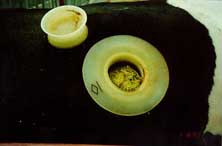 organs (in Lucy's case, her rumen). Lucy is used in animal sciences lab classes to teach students about ruminant digestion. Students can stick hands (or entire arms, actually) into Lucy's rumen and feel the micropapillae that help her digest her food. If you have long enough arms, you can actually reach all the way into other compartments of her stomach and feel how the structure of the stomach wall changes depending on that compartment's function in the digestive system. It's pretty cool (and extremely weird).
This is one kind of animal research that I'm totally okay with. The only time Lucy suffered because of the fistula was during to the initial surgery to install the cannula. That was done with plenty of anesthetics, of course, but surgery is never going to be completely stress-free. Lucy doesn't feel a thing when the cannula is opened or when people put their hands in. The rumen is a really tough environment: highly acidic (it's basically a big fermentation vat) and huge (it holds hundreds of pounds of food at a time), so she isn't bothered by the temporary addition of someone's hand or arm. Meanwhile, students have a great, hands-on, highly memorable way to learn about ruminant anatomy without having to use dead animals for dissection. Overall, I'd definitely say this is a win-win situation.

3 comments:
personally, I am more against this kind of experimentation, with low-yield learning that could be done otherwise, then even more painful and debilitating research done on animals, but with higher yield, such as learning how to cure disease
just a thought from a random visitor to your blog:) ...
What kind of antibiotic treatment is Lucy on? Doesn't putting a semipermanent hole into one of her internal organs present a huge risk for infection?
Bob: she isn't on antibiotics, and it doesn't get infected. The rumen is attached to the body wall, so the hole goes straight into it, not into the body cavity (which is where infection would be more likely to occur). The acidity of the rumen kills any potentially harmful bacteria that might get in there when the cannula is open.
Post a Comment